
Gym and Fitness Facility Washroom Compliance in Ontario
Fitness facilities have the hardest washroom compliance problem in Ontario, and it’s not close.
Your washrooms aren’t washrooms — they’re change rooms with showers, wet floors, high humidity, lockers, and a user population that arrives sweaty and leaves wet. The usage pattern is spiky: an empty facility at 2 PM and a queue at 6 PM. And the hygiene stakes are elevated in ways that a dry office washroom never faces.
Bill 190 applies to all of it. Here’s how to build a program that holds.
What’s Actually Covered
The OHSA obligation attaches to washroom facilities provided to workers. In a gym, that means:
Staff washrooms and change rooms — clearly covered.
Member change rooms, where staff also use them — covered in practice. In most fitness facilities, trainers, front desk staff and cleaners use the member facilities. Once they do, those facilities are provided to workers.
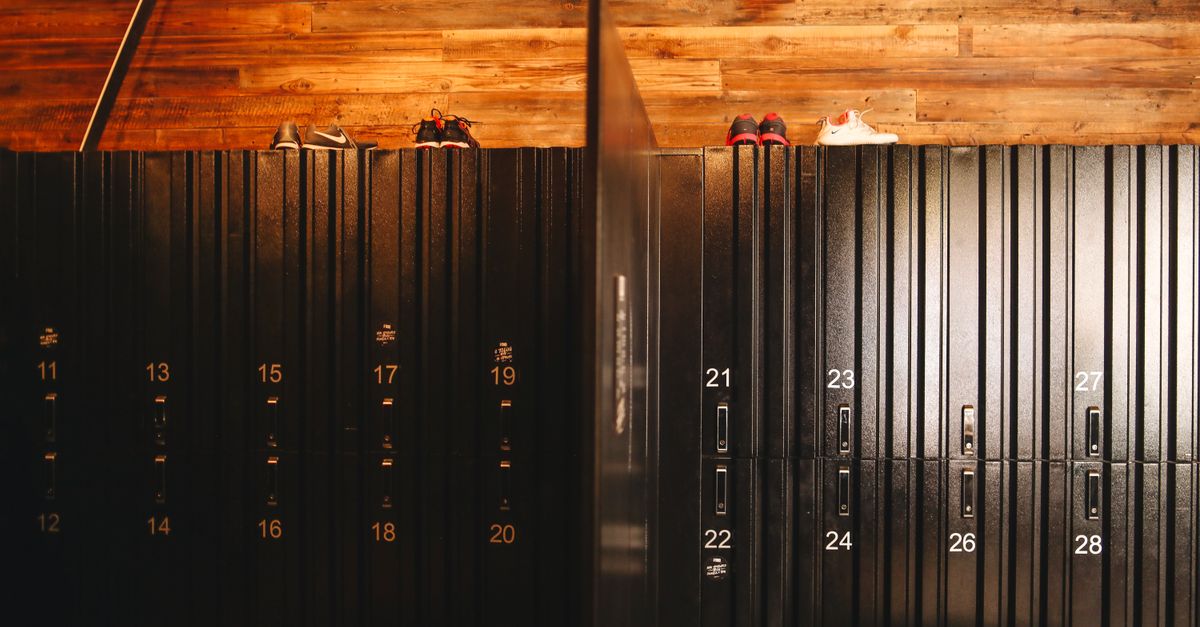
Showers within change rooms — this is where it gets interesting. A shower isn’t a toilet, and O. Reg. 480/24 speaks to washroom facilities. But showers are almost always inside the change room that contains the toilets, and the whole space is what an inspector walks into. The practical approach is to treat the change room as a single facility and log the cleaning of the whole space.
Pool and sauna adjacent facilities — if you have them, and staff use them, they’re in scope. They also fall under separate public health regulation for recreational water facilities, which is a different framework with its own requirements.
The Wet Environment Problem
Everything hard about gym washroom compliance traces back to water.
Degradation is fast. A change room floor that’s clean at 5 PM is wet, tracked, and carrying debris by 6:30. The interval between “compliant” and “not compliant” is measured in tens of minutes during peak, not hours.
Cleaning and sanitizing are different tasks and both are harder. A wet floor doesn’t let a disinfectant achieve its dwell time. If your protocol says apply disinfectant and leave it for the contact time on the label, and the floor is being walked on continuously, you’re not actually sanitizing — you’re diluting.
Pathogen risk is genuinely higher. Warm, wet, high-touch surfaces used by people in bare feet. This is the environment where fungal infections and other transmissible conditions spread. This isn’t a compliance abstraction; it’s why the standard exists.
Visible cleanliness and sanitary condition diverge sharply. A change room can look fine and be a problem. Section 25.3’s “clean and sanitary” standard covers both, and the second one is invisible.
Frequency: Build It Around Your Peak
The single most useful thing a gym operator can do is stop thinking about frequency as an interval and start thinking about it as a curve.
Your facility has a shape to its day. For most Ontario gyms it looks like:
-
5—8 AM: early rush, heavy shower use
-
9 AM—4 PM: light, steady
-
4:30—8 PM: the peak, heaviest of the day
-
8—11 PM: tapering
A flat “every two hours” schedule over-serves the middle of the day and badly under-serves the evening. The evening peak needs a cleaning presence, not a cleaning visit.
The pattern that works:
-
Post-peak deep clean after each rush — full clean, sanitize with proper dwell time, logged
-
In-peak maintenance passes every 30—45 minutes during the evening rush — floors, high-touch surfaces, restock — logged each time
-
Off-peak scheduled cleanings every two hours
-
Overnight full sanitize when the facility is empty and dwell time is actually achievable
Note that last point. The only time you can properly sanitize a change room floor is when nobody’s walking on it. If your facility closes, the overnight or pre-open clean is your real sanitizing window and everything during the day is maintenance. If you’re 24-hour, you need to designate a low-traffic window and manage it.
Logging in a Wet Environment
A practical problem nobody warns you about: paper logs die in change rooms. Humidity, splashing, condensation. A paper log mounted in a change room will be curled, spotted and illegible within a month, and an illegible record is not a record.
Options:
Laminate and mount outside the wet zone — near the change room entrance rather than inside it. Still needs to be “in or near the facility,” and the entrance qualifies.
Go digital. A QR code on a laminated card or engraved plate survives humidity indefinitely, and the record itself lives on a server rather than on paper in a steam room. For fitness facilities specifically, this isn’t a preference — it’s close to a practical necessity.
The other advantage in a gym context: your cleaner is doing 30-minute maintenance passes during peak. Filling in a paper log fifteen times an evening won’t happen. Scanning a code fifteen times will.
Staff Turnover and Training
Fitness has high turnover, a lot of part-time staff, and often a mix of employees and contractors (personal trainers frequently being the latter). Your washroom logging process needs to survive that.
Two specific issues:
Contractor trainers are not your employees — but if they’re working in your facility, they’re workers in your workplace for OHSA purposes, and the records need to be accessible to them. A QR code handles this automatically. A “log into the staff portal” system does not, because contractors often don’t have portal accounts.
Front desk staff often do the maintenance passes during quiet periods, alongside their actual job. That means the person cleaning at 7 PM Tuesday is different from the person cleaning at 7 PM Wednesday. The process has to be learnable in two minutes.
The Member Trust Angle
Gym members care about change room cleanliness more than almost any other facility attribute. It’s a documented driver of retention and cancellation.
Very few Ontario fitness facilities make their cleaning records visible to members. The compliance requirement only covers worker access. But a QR code in the change room that any member can scan to see the last two cleanings, timestamped, is a differentiator in a category where everyone claims to be clean and nobody proves it.
Worth thinking about, particularly if you’re competing with a chain on price and want a quality signal that costs you nothing extra.
Compliance Checklist for Ontario Fitness Facilities
☐ Inventory every change room, washroom and shower area staff use
☐ Treat each change room as a single facility with its own record
☐ Build frequency around your actual daily curve, not a flat interval
☐ Designate a real sanitizing window when floors can achieve dwell time
☐ Use a moisture-proof record — QR code strongly preferred over paper
☐ Log every maintenance pass, not just the deep cleans
☐ Ensure contractor trainers can access records without a login
☐ Make the two-minute training part of onboarding for every new hire
☐ Check pool and sauna facilities against recreational water regulations separately